

On Friday, October 18, The Norris Group proudly presents its 6th annual black tie event I Survived Real Estate. An incredible line-up of industry experts joins Bruce Norris to discuss perplexing industry trends, head-scratching legislation, and opportunities emerging for real estate professionals. Proceeds for the event benefit Make a Wish and St. Jude’s Children’s Research Hospital. This event would not be possible without the generous help of the following platinum partners: PropertyRadar and Sean O’Toole, HousingWire, the Apartment Owners Association, the San Diego Creative Real Estate Investors Association and President Bill Tan, Investors Workshops, InvestClub for Women and Iris Veneracion and Bobi Alexander, San Jose Real Estate Investors Association and Geraldine Barry, MVT Productions, Wilson Investment Properties, RODA Construction, and White House Catering. For event information and tickets, visit www.isurvivedrealestate.com.
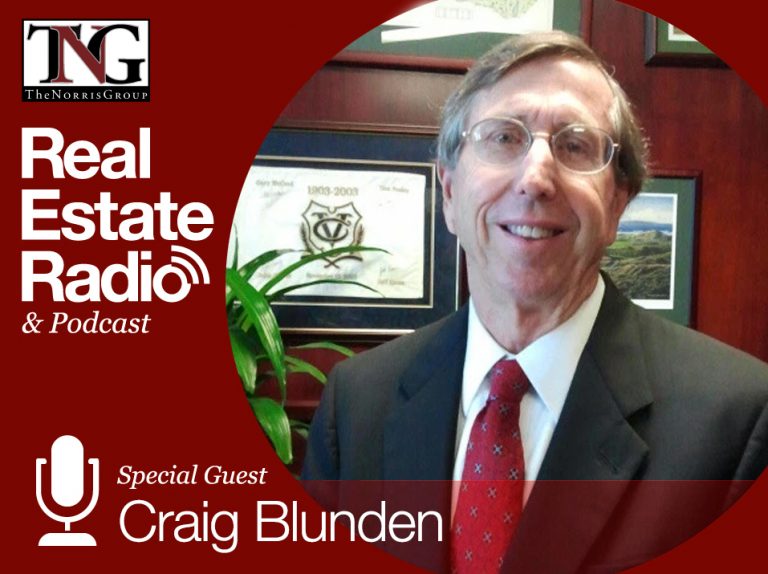
Bruce Norris is joined this week by Craig Blunden. Craig has been the president and chief executive officer of Provident Savings Bank since 1991. In addition, he has been the chairman and chief executive officer of Provident Financial Holdings, Inc. since its formation in 1996. He has been associated with Provident Savings Bank since 1974.
Bruce said two dates stood out to him when he read his bio. The year 1974 was interesting because California had a median price of $34 grand while the country had a median price of $31 grand. Six years later, California had tripled in price, and interest rates had doubled in those six years. This was an interesting time to get into the lending business. Bruce was curious if there were any lessons that presented themselves in those six years that might come in handy in the next period of time. Craig said we should have hoped we learned lessons then that we would not have forgotten in the 2004-2006 era, but unfortunately we didn’t. There we decided we did not care if people qualified or not, so this was definitely an interesting time.
In 1991, you also had the beginning of a downturn that was not common for California up until then. This was a five-year run, and there you had to deal with policies that probably would have been more conservative. Bruce asked if during that stretch there were lessons learned that were really put into play when everyone else was going crazy with loans. Craig was looking back at the lessons of the past and saying what was not a good idea. Craig had been at the bank since 1974 and had been through quite a few interesting times. California seemed to have its own ups and downs, and now we are somehow separate from the rest of the U.S. In the 1990s, values took tremendous hits on commercial real estate that Craig did not remember seeing in the other downturns. We certainly learned a lot then in underwriting, and we kept those guidelines all the way through this last era in the mid-2000s. This way we did not make the same mistakes as we watched other financial institutions forget or ignore what they might have learned before in the 90s.
It is hard to make some policy decisions since market share must have been hard to maintain. If everyone around you is opening the vault, it is hard for you to keep your market share if you are not doing the same thing. We did not grow as we would have liked to during that period of time, and we took a lot of heat from the originators saying they were losing some deals. However, they made some decisions that were long-term decisions and really worked out well. If you look around the region in the Inland Empire, since several institutions failed in the last five years since they did what everyone else did. The one thing that was probably still difficult, even in the loans Craig was doing, was he still had an appraiser that was looking at comps that were accurate. There was evidence the numbers were right, but the numbers were bumped up because the market also was. When they saw cap rates falling like they did, they knew long-term that those cap rates were unsustainable. It was a bitter pill, but they just did not do the deals that other people were doing. They made loans, but not like how they would have liked to have made them. It was a long-term decision.
Regarding the commercial world, it probably had the benefit of some generous tax treatment, and some of those things were taken away. In the 80s you could deduct a lot of interest off your income, and when they changed the game commercial real estate all of a sudden had a very different valuation. Going forward, you have to keep one eye on keeping the business going and another on if there are any tax changes that could affect an industry if you cannot deduct interest anymore. Craig said there are so many uncertainties, whether it is the new regulations coming into effect or the changes in what regulators like to see. You have to stay flexible and be dancing on your feet getting ready for whatever changes occur. If you have pretty sound underwriting, life for tax purposes, there is room in the loans for problems. The loans they made were smaller loan amounts back then, and they used higher vacancy factors and cap rates. When they actually had vacancies, the deals still cash-flowed. This was the whole key, and there is really not more you can do than this.
Bruce asked if this is where overlays come into play when you might be given boundaries you can go to, and then say you would rather not approach the boundary since it has the chance of becoming a bad loan eventually. You could call this the internal underwriting overlays since they are different with several lenders. Lender overlays today are more on the single-family side because of investors and the agencies. We are all trying to stay in good with the investors and make sure our loans are good. This is why many in the last few years have had overlays that have been more conservative and affect volumes in the market.
Bruce asked what percentage of Provident’s business has to do with residential. Craig said in the last four years 90-95% was residential since they just found the commercial and business banking side was pretty dead. This was especially true in the Inland Empire. Fortunately, we they run a pretty large mortgage banking operation statewide that a year ago did $3 ½ billion in single-family. Yet the houses at his institution are $1.3 billion. Bruce also asked Craig what type of loan he would have in a portfolio. A portfolio loan is one you keep rather than sell off in the open market. Craig said originally over the years they started as a savings and loan, and most of the portfolio loans were single-family loans that were adjustable rate loans. They could be 30-year, but they would have adjustments. They may have been fixed for 3-5 or for some other period, and they were adjustable after this. The rest of the portfolio including multi-family, commercial real estate loans, and some business loans as well.
Bruce asked if commercial loans generally have amortization or if they have a call date. Craig said they would be 25-30 years depending on the product and would have an adjustment rate where after the fixed-rate period they would adjust depending on the index semi-annually. However, they do not all come all due and payable inside of the timeframe. This is a safer loan because this is one of the problems for commercial real estate right now. We have a lot of debt coming due exactly at the wrong time.
Bruce asked about Craig’s treatment of investors, both the ones who buy and flip homes or buy and hold rentals. He wondered if Craig had programs for them. Craig said they do and that they have them available on both sides. The ones who are buying, rehabbing, and selling really go through the business lending area. For the investors who are true real estate investors over the long term with rentals, depending on if they are single-family and 1-4 units, their normal mortgage banking operation handles the loans. These are also dealing with the policies of Fannie and Freddie and the allotment they will allow. One is 10 and another is 4. Bruce wondered if there was any thought of this becoming aggressive at some point as he thought this would be a great way to solve the glut of properties. There are some customers for whom they make the homes that they do not sell to investors, and they end up on their portfolio. In that case they can take more of those loans, put them on their portfolio, and possibly limit them to four loans with Fannie or Freddie.
Bruce wondered if these loans were fixed for a certain period of time. Craig said they are because they cannot take the interest rate risk of a 30-year loan. This makes perfect sense in an environment where interest rates behave in this way. Since Craig has the perspective of what 1974 was like going into 1980, he knows that interest rates can go from 7 ½ to 15. Now we have gone all the way from 3 ½ to 4 ½, and everybody is fretting. Craig said there are reasons for this. He remembers 1980 and 1981 when things were about as bad as they could be, or so he thought at the time. If it had lasted longer, most of us would not have survived. We were paying for deposits anywhere from 12-16% and trying to make loans at 18-20%, and they were not making many.
Bruce remembered a CAR study one time in 1981 and 1982 when over half of the real estate transactions did not inquire a new loan since people were taking over existing loans. This included subject to loans, blended rates, and carrying seconds. It is kind of good to have creativity sometimes when you need it. Sometimes the policies do not want to allow something like this, but it could have come in handy. Bruce asked Craig if he sees interest rates going from 3 ½ to 4 ½ as really affecting the market as far as the ability for people to qualify. Craig said it has affected not this so much as it has affected the refi market, and this was such a big part of the market in the last year or more. Refis were really driving the market; there just have not been as many purchase money transactions as all of us would like to see. There have not been a lot of products, certainly on the lower and affordable housing end, and he would love to see more. He would love to know about the shadow inventory since he knows it is out there somewhere, he just cannot see it or get his hands onto it.
When Bruce saw the numbers a few years ago, he thought that was the big problem in that the inventory was going to show up now. One of Bruce’s friends in the business, Sean O’Toole of PropertyRadar, literally counts all these things. The big shadow inventory does not align with what the banks own or what they might be able to produce, but it is the person who is still behind in their payment and allowed to be so for 2-3 years. This is the person who could show up, but they keep disappearing in number because we have very aggressive price increases. On the lending side, patience really seems to have worked well. He said he would still like to match in construction loans eventually because if they made one really smart decision back in the mid-2000s, it was to stop doing construction loans.
It would have been really good if the contractors had maybe listened to Craig’s policy. They have so much at stake and such a long horizon that they have to watch out for years. In essence, Craig had to stop construction loans in the middle of the heyday. Craig said they stopped in January of 2006. Bruce had a debate with one of the top Riverside economists in front of the builders in July 2005. It was very bullish on the other side; and he was saying he would sell every house, lot, and building project because what he saw was it just could not continue. The problem is that it is very difficult; and as a lender you are making every construction loan in sight profitable and people are selling every house. Then, you tell them we’re done, and they must have been shaking their heads wondering what happened.
Craig said they had this comment from a lot of their institutional investors. There were people in the industry who questioned him because they were a profitable part of the business. They also had a couple loan officers who he told needed to work for somebody else or they would starve. Afterwards, the institutions they went to both failed. Craig has been through these cycles before, and this included the construction loan cycle. They both know that these only last so long. Lending policies in 2005 and 2006 really allowed the prices to get to numbers that were unprecedented in relationships to incomes. A lot of the properties that were supposedly being purchased owner-occupant were really people other than that saying they were going to live in them. This did not help matters. When you hear your hairdressers talking about how they are all going in and buying rental properties to flip them, then you know you’re done.
Bruce actually lost three people himself during 2006 since they were all flipping houses. It was similar to the old stock stories. He was listening to this also, but he had already figured out by the numbers what was happening. Bruce and Craig also talked a lot about uncertainty and asked what is going on with Dodd-Frank in 2014. Craig said they are not totally certain since the Consumer Finance Protection Bureau has been putting out information. They are all working on their software, and they only know it is not a positive thing. They do not know how much it will affect them, only that it is not a good thing. Dodd-Frank gave them CFPB. They already had a lot of regulators who, if they had been doing their job properly, then we would probably not need a CFPB. However, we have it and this will make it harder for all of us to deliver the same products we had in prior years.
Some of the portfolio products that they did before with self-employed people who had terrific loans before stated income came would not be able to be made today. You cannot make them, even if you could look on paper and say you can get paid 99.9% of the time. This is something you cannot even do because you cannot absolutely prove that they can afford the loan. The whole today with them is you have to make loans that can be paid back. This was a noble concept, and they always thought they did make these loans until some of these crazy underwritings occurred and Wall Street believed all this nonsense. This went on for a while, and everybody was involved in it.
One of the questions Bruce was going to ask was if Dodd-Frank was vindictive or constructive. Are we creating policies to punish 2005 and 2006 instead of going forward from 2014 to 2020? Craig said the answer is yes and that Congress wanted to punish the financial services industry, and they have done this. Like anything else, there are pieces in Dodd-Frank that make sense, but much of it is just tentative and like the Obamacare. There are pieces of that which are smart and well thought out, and then there is the rest of it that is a mess. This is what we get, and Craig thinks most of them did not even read Dodd-Frank.
At the I Survived Real Estate event, some of the panelists have been in front of Congress. One of his questions is when they are trying to suggest something, it really helps that the other side of the table really gets what you are suggesting. If they do not have enough experience to understand what you are suggesting, it does not go anywhere. Bruce wonders how much of the information they think is really good has unintended consequences. Craig said unfortunately it is a lot. What this does is it layers on another level of compliance issues and regulation that you cost you overhead but certainly does not drive more income.
Bruce wondered if the income side is affected by the regulations as well. Craig said they are, so you have it squeezed from both sides. This should eliminate competition, but it also may eliminate product type. This is going to be a natural thing that you are going to land on the safest space. This may drive more business to individuals that are not regulated the same way all of us are regulated. Craig thinks somehow somebody is going to figure out how to make a jumbo loan to a highly qualified individual at a low loan-to-value who has great credit but cannot prove their income. Then we all cannot make that loan. Somebody somewhere is going to make that, and it is going to be a wide open market.
Bruce asked about Craig’s experience when we have price increases if it lasts for a while and if lending policies usually join and become more aggressive. Bruce wondered if that will happen this time, although Craig does not think so since people are being a lot more conservative than they were. It probably will not happen as much; and there will be more plateaus in the price increases, especially as interest rates bounce up a bit. Bruce wondered if we have a decision on the down payment requirement for a qualified residential mortgage. Craig said we do not and that this is too much to ask 60 days out. We still do not know if it is 20 or 0. Bruce asked who gets to decide this, which Craig said for the most part CFPB decides. Other regulators are stepping back and letting them handle it. They are probably getting input from others and already have in the past. They have written tens of thousands of letters, whether to mortgage bankers or to American bankers.
The Norris Group would like to thank its gold sponsors for supporting I Survived Real Estate 2013: Adrenaline Athletics, REIExpo.com, Coldwell Banker Town and Country, Claudia Buys Houses, Elite Auctions, FIBI (For Investors By Investors), In a Day Development, Inland Empire Investors Forum, Inland Valley Association of Realtors, Investor Experts Inc, Keystone CPA, Las Brisas Escrow, Leivas Associates, Homevestors, Bottomfeeders, Northern California Real Estate Investors Association, Northern San Diego Real Estate Investors Association, Orange County Real Estate Investors Association, Orange County Investment Club FIBI, Personal Real Estate Magazine, Pilot Limo, Primary Residential Mortgage, Realty 411 Magazine, Rick and LeaAnne Rossiter, Southwest Riverside County Association of Realtors, Sonoca Corporation, Spinnaker Loans, uDirect IRA, Tony Alvarez, and Westin South Coast Plaza.
See www.isurvivedrealestate.com for more on the event and all of our sponsors.
For more information about The Norris Group’s California hard money loans or our California Trust Deed investments, visit the website or call our office at 951-780-5856 for more information. For upcoming California real estate investor training and events, visit The Norris Group website and our California investor calendar. You’ll also find our award-winning real estate radio show on KTIE 590am at 6pm on Saturdays or you can listen to over 170 podcasts in our free investor radio archive.